
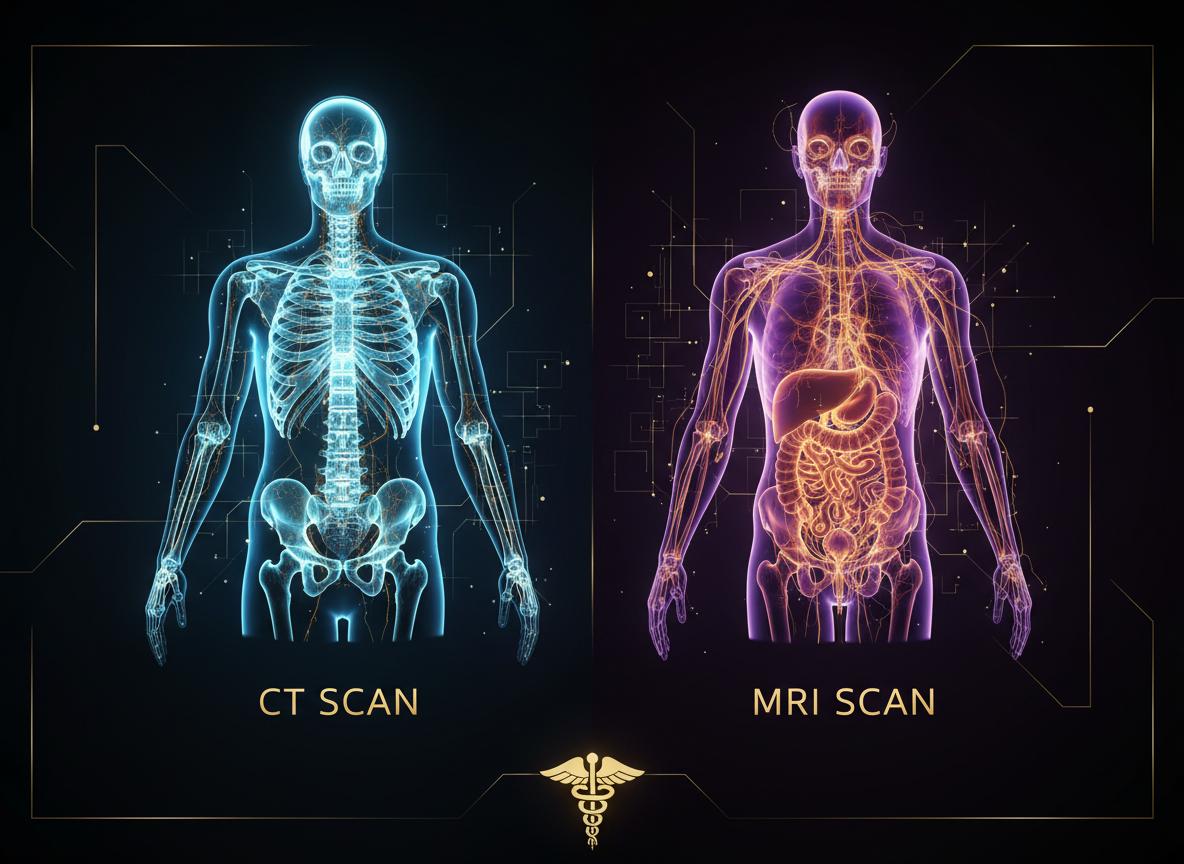
If your doctor has prescribed a scan and you have walked out of the consultation a little unsure whether it was an MRI or a CT — you are not alone. The two terms are used interchangeably in everyday conversation, even though the technology, the experience inside the room and the kinds of questions each scan answers best are quite different.
What an MRI actually does
An MRI (Magnetic Resonance Imaging) uses a strong magnetic field together with carefully tuned radio-wave pulses to create detailed cross-sectional pictures of the body. There is no X-ray radiation involved at any stage. Because MRI is exceptionally good at distinguishing between different kinds of soft tissue, it is the preferred first choice for the brain, spinal cord, joints, ligaments, the liver and bile ducts, the prostate, the uterus and many cancers in early stages.
A typical MRI at Pioneer takes 20 to 45 minutes. You will lie still on a comfortable padded table that gently slides into the scanner. The machine itself makes a series of knocking sounds — we provide ear-protection so the experience stays calm and tolerable.
What a CT scan actually does
A CT (Computed Tomography) scan uses a rotating X-ray beam to capture hundreds of thin "slices" of the body in seconds, which a computer then reconstructs into detailed images. CT is unmatched for speed and is therefore the right tool in trauma, suspected stroke (in the first window), chest emergencies, suspected kidney stones and most acute abdominal pain.
A CT scan at Pioneer is usually completed in under 10 minutes — sometimes in under a minute of actual scan time. There is a small radiation exposure involved, but our protocols are dose-optimised, particularly for younger patients.
So which one do you need?
Almost always, the answer comes from your treating doctor — they choose based on your symptoms, medical history, what they need to rule in or out, and the urgency. As a rough guide:
- Brain symptoms (weakness, vision changes, persistent headache) — MRI brain is usually preferred unless an emergency CT is needed first.
- Back or neck pain with neurological symptoms — MRI spine.
- Joint or knee pain after injury — MRI joint.
- Suspected kidney stone or acute abdominal pain — NCCT abdomen.
- Chest infection, persistent cough, COVID follow-up — HRCT chest.
If you are unsure which scan was prescribed, our front desk in Bathinda will clarify it for you in a single phone call — and if it helps, we will also message your prescription to for a quick confirmation before you book.
Disclaimer: This article is general information and not medical advice. Please consult your doctor for guidance specific to your condition.