
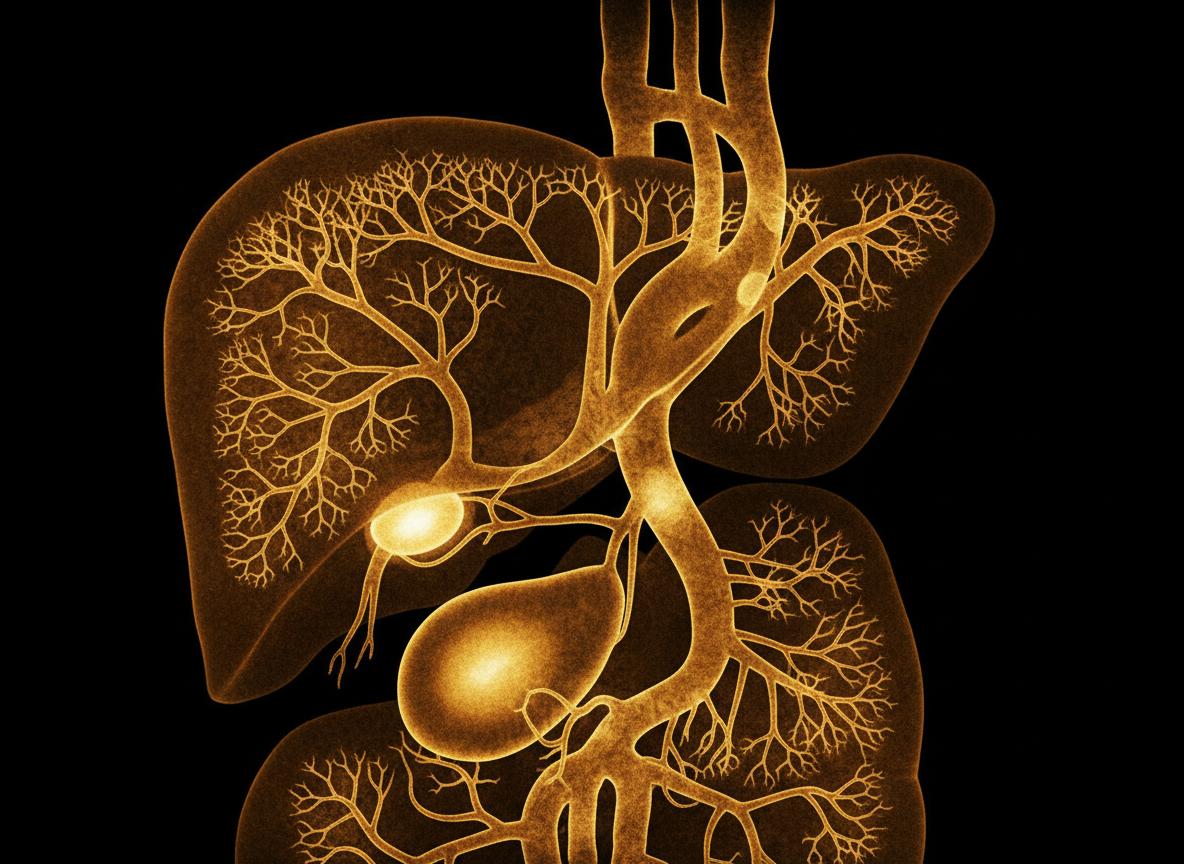
An MRCP is essentially a focused MRI study, tuned with specific sequences that make fluid-filled structures — the bile ducts, gallbladder and pancreatic duct — light up brightly while everything else fades into the background.
Why your doctor may suggest an MRCP
The most common reasons are suspected stones in the bile duct (especially after gallbladder surgery), narrowing or strictures of the bile ducts, suspected pancreatic disease, or unexplained jaundice. It is often used as a non-invasive alternative to ERCP, the older endoscopic procedure that carries some procedural risk.
What the scan feels like
You will be asked to fast for around four to six hours so the gallbladder and ducts are well-distended and easier to see. The scan itself feels just like a regular MRI — quiet, painless, and contained within a half-hour visit. You can usually go straight back to work afterwards.
Is contrast needed?
For most diagnostic questions, no. The bile is its own natural contrast on MRCP. In selected cases, a small amount of intravenous contrast may be added to characterise a lesion in the liver or pancreas — this will be discussed with you and your doctor before the scan begins.
How long until I get the report?
At Pioneer, MRCP reports are typically delivered the same day, signed by , with key images annotated for your treating physician.
Disclaimer: This article is general information and not medical advice. Please consult your doctor for guidance specific to your condition.